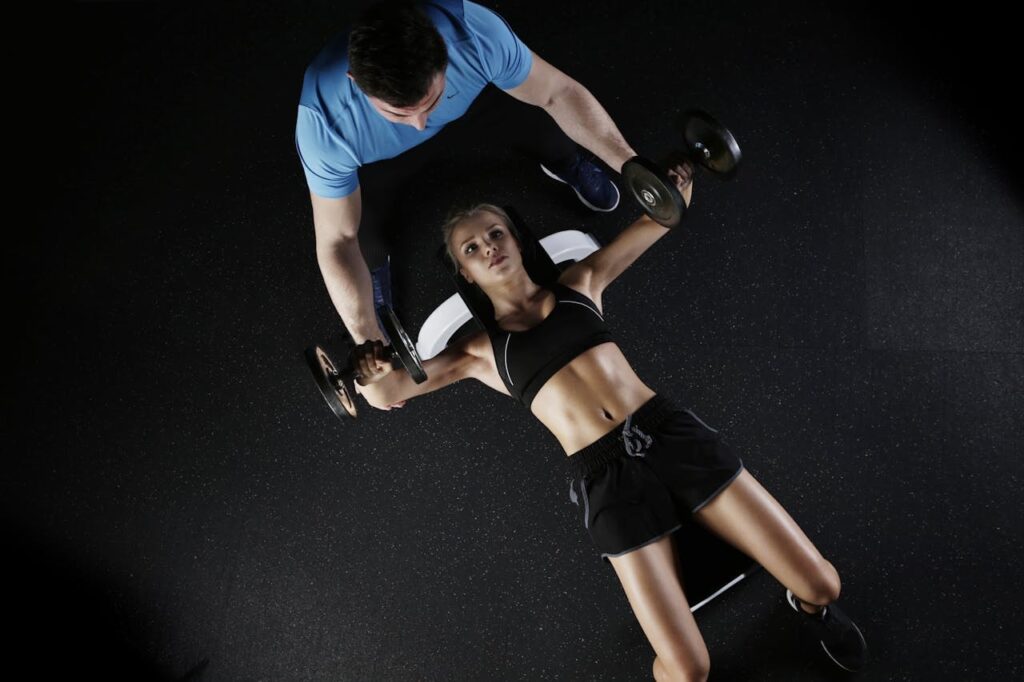
Stuck Without a Gym? Here’s Your Whole Body, Joint-Friendly Plan You’ve got a cranky shoulder from years of overhead pressing. Your knees remind you of that old running injury every time you load up the barbell. Or maybe you just can’t get to the gym because your schedule looks like a game of Tetris gone …
Whole Body Calisthenics Workout: Joint-Friendly Strength Training You Can Do Anywhere
Adam Babcock
January 20, 2026

Stuck Without a Gym? Here’s Your Whole Body, Joint-Friendly Plan
You’ve got a cranky shoulder from years of overhead pressing. Your knees remind you of that old running injury every time you load up the barbell. Or maybe you just can’t get to the gym because your schedule looks like a game of Tetris gone wrong.
Good news: a full body calisthenics workout can build serious strength, power, and body control using only your bodyweight and simple household items. A sturdy chair, a table, a doorframe pull up bar. That’s it. No rack, no plates, no waiting for equipment.
This article comes from the perspective of a physical therapist who works daily with runners, lifters, and weekend athletes in a busy urban clinic. The focus here is on joint-friendly, sustainable training rather than flashy tricks that look great on social media but send people limping into clinic. You’ll get a ready-to-use whole body routine you can start today, progressions for beginners through advanced, and safety checks plus red flags embedded throughout so you know when to push and when to pause.
The full workout is outlined in the next couple of sections. Let’s get you moving.
The Quick Plan (Start Here)
Do Workout A and Workout B this week.
Pick 1 variation per movement.
Do 2 sets.
Stop 1–2 reps before form breaks.
Progress when you hit the top of the rep range pain-free for 2–3 sessions.
What Makes a Whole Body Calisthenics Workout “Joint-Friendly”?
Calisthenics is strength training using your body weight and gravity. That’s the simple definition. The practical reality is that it can be scaled up or down for any fitness level, from someone rebuilding after knee surgery to an athlete chasing their first muscle ups.
Why does this approach tend to be easier on joints than high-load barbell work? A few reasons stand out:
Freedom of movement matters. Unlike fixed machines that lock you into a single path, bodyweight exercises let your shoulders, hips, and spine find their natural movement patterns. If one angle hurts, you adjust. That flexibility reduces grinding and pinching in problem joints.
No heavy external load required. You don’t need to stack 200 pounds on your back to get a training effect. Bodyweight movements challenge multiple muscles and muscle groups at once, and you can make them harder through tempo, range, or leverage changes rather than adding weight.
Easier to modify range of motion. Dealing with shoulder impingement? You can limit how deep you go on a pike push-up. Knee pain with deep squats? Start with a higher chair for sit-to-stand work. These adjustments are simple and immediate.
Common problem areas we see in clinic include shoulders beaten up from overhead lifting, knees irritated from running or poorly executed squats, and low back pain from sitting all day combined with weak core control. Smart exercise choices work around these issues while building the strength to fix them.
Calisthenics can serve as your primary strength plan for general fitness or as a cross-training tool for sports like running, climbing, skiing, or recreational league play. Either way, it earns its place.

What’s Going On? Common Joint Sensitivities and Movement Clues
If push-ups flare the front of your shoulder, you might be losing scapular control or pushing into painful end ranges of motion.
If squats cause knee discomfort, check your squat depth, shin angle, and tempo—too deep or too fast can irritate sensitive joints.
Low back pain during planks or bridges might signal weak core engagement or poor hip mobility.
These clues help you adjust your form or choose easier variations to protect your joints while building strength.
How Often to Do This Whole Body Calisthenics Workout
The recommendation for most healthy adults is 2 to 4 sessions per week, with at least one rest or light-movement day between strength days.
Here are three sample weekly structures:
Beginner (2x/week full body)
Monday: Workout A
Thursday: Workout B
Intermediate (3x/week full body)
Monday: Workout A
Wednesday: Workout B
Friday: Workout A (alternate the following week)
Advanced (4x/week alternating emphasis)
Monday: Workout A
Tuesday: Workout B
Thursday: Workout A
Friday: Workout B
Each session should last about 30 to 45 minutes including warm up and cool-down. Quality of movement matters more than cramming in extra volume.
If you’re combining this calisthenics workout routine with running, cycling, or pickup sports, avoid stacking high-volume leg exercises the night before hill sprints or long rides. Space them out so your legs have time to recover.
Rest days between calisthenics sessions support muscle recovery and help prevent overuse injuries, which is critical for long-term progress.
Warm-Up: 5–8 Minutes to Prepare Joints and Tendons
A proper warm up can help reduce joint irritation and prepare your muscles and tendons for training. This is especially important if you spend much of your day sitting and then jump straight into exercise.
Here’s a simple, equipment-free sequence:
1 minute of brisk marching in place or light jumping jacks to raise your heart rate
10 to 15 arm circles in each direction, plus 10 scapular wall slides if you have wall space
10 bodyweight good mornings (hip hinge pattern) to wake up hamstrings and glutes
10 to 15 dynamic lunges with a gentle torso twist at the bottom
20 to 30 seconds each of high plank position and side plank to activate the core
Coaching cues: Keep a neutral spine throughout. Soften your knees slightly during standing movements. Breathe through your nose when possible and keep effort around a 3 to 4 out of 10.
Safety note: If you have recent surgery, unexplained swelling, progressive neurologic symptoms, or cardiac symptoms, get medical clearance before starting.
If sharp pain, numbness, or sudden joint catching appears during the warm up, stop and modify. If it persists, contact a professional before continuing.
Recommended warm-up includes light cardio for 5–10 minutes to prepare joints and muscles, which improves workout efficiency and reduces injury risk.
The Whole Body Calisthenics Workout (No Gym Required)
This calisthenics routine is organized around five key movement patterns:
Horizontal push (push ups and variations)
Vertical push (pike press, handstand work)
Horizontal pull (rows)
Vertical pull (chin ups, pull ups)
Squat, hinge, and core work
Most people should perform 2 to 3 sets of each exercise, 8 to 15 controlled reps per set. For isometric holds like planks, aim for 20 to 40 seconds. Rest 45 to 90 seconds between sets.
The program splits into two sessions that alternate across the week:
Workout A: Horizontal push, horizontal pull, squat focus, anti-extension core
Workout B: Vertical push, vertical pull, hinge focus, anti-rotation core
Beginners who are very deconditioned should start with 1 to 2 sets and leave an extra rest day. Advanced athletes can add an optional conditioning finisher at the end. More on that below.
How To Progress

Progressive overload is how you get stronger over time. With free weights, you add plates. With calisthenics, you add reps, slow down the tempo, or move to a harder variation. Your muscles don’t care where the challenge comes from, just that it exists.
Full body patterns beat isolated muscles. Compound movements like push ups, pull ups, and squats recruit multiple muscle groups at once. This builds functional strength that transfers to real-world activities and sports.
RPE (Rate of Perceived Exertion) is your built-in intensity gauge. Use a 0 to 10 scale where 0 is lying on the couch and 10 is absolute failure. Most working sets should land around 7 to 8 RPE, meaning you could do 2 to 3 more reps with good form. The final set on an exercise might push to a 9.
For joint-sensitive athletes, stop 1 to 2 reps before form breaks down. Choose an easier variation rather than grinding out ugly reps. Ego sets lead to clinic visits.
One simple rule for progression: Change only one variable at a time — increase reps, slow tempo, extend range of motion, or adjust leverage — to avoid overwhelming your joints and nervous system.
Workout A: Push, Row, Squat, Core
Workout A is the more horizontal day. It often feels easier on the shoulders and neck than heavy overhead lifting, making it a good first exercise for many people.
Slot 1: Push-Up Variation
Wall push ups (easiest)
Incline push ups on counter or sturdy chair
Standard floor push ups
Feet elevated push ups (harder)
Push-ups are a compound calisthenic exercise that targets the chest, shoulders, and triceps, making them highly effective for upper body strength and muscle tone.
Slot 2: Inverted Row
Australian pull ups under a sturdy table
TRX or ring rows if available
Barbell in a rack at hip height
Inverted rows, also known as Australian pull-ups, build horizontal pulling strength and target the upper back, lats, biceps, and core, complementing push movements for balanced upper body development.
Slot 3: Squat Variation
Supported sit-to-stand from a chair (easiest)
Bodyweight squats with feet shoulder width apart
Split squat or reverse lunge
Assisted pistol squats using a doorframe for balance
Bodyweight squats are a simple yet effective bodyweight exercise that targets most of the muscles in your legs, like your glutes, hamstrings, calves, and quads. Progressions to pistol squats challenge balance and unilateral strength by focusing on only one leg at a time.
Slot 4: Core Anti-Extension
Front plank (body forms a straight line from head to heels)
Dead bug with arms extended and knees bent at 90 degrees
Hollow hold progression
Planks enhance core stability and strength, which is essential for protecting the spine during compound calisthenic exercises and improving overall body control.
Programming:
2 to 3 sets per exercise
8 to 12 reps for strength focus
Up to 15 to 20 reps for endurance on easier variations
30 to 60 seconds per core hold
Form cues for joint-friendly movement:
For push ups, keep elbows 30 to 45 degrees from your body. Avoid letting your low back sag. Keep your body straight from head to heels throughout.
For rows, maintain a neutral neck and pull your chest toward the bar or table edge, not your chin. Squeeze your shoulder blades together at the top.
If you have knee pain, reduce squat depth or use a higher chair. Sharp, localized joint pain (different from muscle fatigue) means stop and modify.

Workout B: Vertical Push, Vertical Pull, Hinge, Core
This is the posture and backside day. It’s great for combating desk posture and supporting running, hiking, and recreational sports.
Slot 1: Pike or Incline Shoulder Press
Elevated pike push-up with hands on a couch or chair
Wall pike hold for time (feet on wall, hips high)
Floor pike push-up (intermediate)
Partial range handstand push-up against wall (advanced)
Slot 2: Vertical Pull
Band-assisted chin ups using a resistance band looped over the bar
Eccentric chin-up: jump to the top, lower slowly for 4 to 5 seconds
Full chin ups or pull ups on a pull up bar or playground set
Chin-ups are a vertical pulling exercise that targets the lats, biceps, upper back, shoulder muscles, and core, helping develop balanced pulling strength critical to shoulder health.
Slot 3: Hip Hinge
Glute bridge on floor with knees bent, feet flat
Single-leg bridge (one leg extended, the other driving)
Hip thrust with shoulders on couch or bench
Nordic curl variation for advanced hamstring work
Slot 4: Core Anti-Rotation and Lateral
Side plank with legs straight, stacked
Suitcase carry with a loaded backpack or single dumbbell
Side-lying hip lift
Programming:
Same set and rep scheme as Workout A
Take longer rest between challenging vertical pull sets (up to 90 seconds)
Form cues for safer shoulders and spine:
For vertical pressing, spread your fingers wide, keep shoulders away from ears, and move within a pain-free range if you have past impingement history.
For hinges, think push the hips back rather than bend the back. Keep ribs stacked over pelvis. The movement happens at your hip joint, not your lumbar spine.
Vertical pulling is often the hardest movement pattern for people starting out. It’s completely normal to begin with only eccentric reps or heavy band assistance, then progress over weeks and months to unassisted pull ups.
Conditioning & Finishers (Optional)
This section is optional. It’s intended for readers who already tolerate the base workout routine without joint irritation or excessive soreness.
Option 1: EMOM for 6-8 Minutes Every minute on the minute, perform:
5 to 8 push ups
8 to 10 bodyweight squats
Rest for the remainder of each minute
Option 2: 3-4 Rounds (30 seconds work / 30 seconds rest)
Step-ups on a stair or low box
Marching plank
Glute bridge march (alternating leg raises from bridge position)
Option 3: For More Conditioned Athletes 3 rounds of:
40 seconds alternating reverse lunges
40 seconds mountain climbers at controlled pace
40 seconds dead bugs with legs straight during extension
The goal is to finish feeling like a 7 out of 10 effort at most. You shouldn’t be gasping on the floor, especially if you’re managing knee or back sensitivity.
If you experience dizziness, breathing distress, or sudden joint pain during conditioning, pause or stop. These are signals to listen to, not push through.
Jump rope is another excellent conditioning option if you have access and your joints tolerate the impact.
Recovery, Soreness, and What’s “Normal”
After starting a new full body workout program, expect some muscle discomfort. Here’s what’s typical:
Mild to moderate muscle soreness peaking 24 to 48 hours after the session (this is called DOMS)
Transient stiffness that improves with light movement and gentle stretching
Feeling like your muscles worked, not like your joints are damaged
Quick recovery tips:
Light walking or cycling on off days
5 to 10 minutes of mobility work for hips, thoracic spine, and shoulders
Consistent hydration and sleep routines, especially during higher training weeks
When soreness becomes a concern:
Pain that is sharp, localized to a specific joint, or worsens with every session
Numbness, tingling, or weakness that doesn’t resolve with rest
Symptoms that limit your ability to walk, climb stairs, or perform daily tasks
If you’re unsure whether your pain is normal soreness or something more serious, it’s worth reaching out to a physical therapist for guidance.
When to Talk With a Physical Therapist About Your Workout
A well-designed calisthenics training plan should make joints feel better over time, not worse. Persistent issues are worth investigating early before they become bigger problems.
Consider scheduling a PT visit if you experience:
Shoulder pain that appears every time you do push ups, dips, or pike work and lingers for more than 7 to 10 days
Knee pain or swelling that increases with squats, lunges, or step-ups and limits walking, stairs, or running
Low back symptoms like pain, tingling, or locking up with planks, bridges, or hinges
Recurrent flare-ups of an old injury each time you ramp up training volume
A physical therapist can assess mobility, identify strength asymmetries, and evaluate your movement patterns. They can modify your calisthenics routine instead of telling you to stop training entirely. They can also provide hands-on treatment and targeted basic exercises to calm symptoms and rebuild capacity.
At a physical therapy clinic, this typically looks like a one-on-one evaluation followed by a customized strength plan that fits your sport, schedule, and home environment.
How Long Until You See Strength and Performance Gains?
Here are realistic timelines for what to expect:
2 to 3 weeks: Neuromuscular improvements kick in first. Movements feel smoother, coordination improves, and exercises that felt awkward start to click. You’re training your nervous system to recruit muscle activation more efficiently.
4 to 6 weeks: Noticeable strength changes appear. You’re hitting more reps on key movements, advancing to harder progressions, and recovering faster between sessions.
8 to 12 weeks: Visible changes in muscle tone and better athletic carryover. Running feels easier, recreational sports performance improves, and daily tasks require less effort.
Progress may be slower if you’re dealing with work stress, poor sleep, or ongoing pain. Adjusting volume or intensity is often more effective than pushing through.
Even 2 sessions per week can produce meaningful gains for busy adults, especially if you’re starting from a low training base. Consistency beats intensity over the long haul.
Calisthenics supports improved joint load management, tendon tolerance, and strength consistency, which translate into better performance and long-term joint health.
FAQ: Whole Body Calisthenics, Safety, and Pain
Can I Build Muscle And Gain Strength With Only Bodyweight Exercises?
Yes. Research supports strength and hypertrophy gains using higher-rep sets and harder progressions. When calisthenic exercises are performed close to fatigue, the training effect is comparable to lifting moderate loads with free weights. Progressive overload is the key, not the source of resistance.
Is Calisthenics Safe For My Knees And Back?
Generally, yes. Joint-friendly variations, controlled tempo, and proper form usually make bodyweight movements safer than high-impact or max-load weight training. Injury rates in bodyweight training tend to be lower than heavy weightlifting, but these vary by population and activity. That said, if something hurts, modify it.
What If I Can’t Do A Single Push-Up Or Pull-Up Yet?
Start with regressions. Wall or incline push ups build the same pushing pattern at a manageable intensity. For vertical pulling, use a resistance band looped over the bar for assistance, or focus on eccentric-only work where you jump to the top and lower slowly. Needing regressions is completely normal and nothing to be embarrassed about.
Can I Combine This With My Running Or Cycling Plan?
Absolutely. Aim for 2 to 3 strength sessions per week on non-interval days. Avoid heavy leg exercises immediately before key long runs or rides. Basic movements like squats, lunges, and hip hinges build the lower body and hip strength that supports endurance performance.
What If I’m Over 50 And Just Starting?
Bodyweight strength work is an excellent entry point. Start with 1 to 2 sets, keep reps moderate, and prioritize form over volume. If you have cardiac concerns or significant orthopedic history, a quick conversation with a PT or physician before starting is a smart move. Age is not a barrier to building functional strength.
What Equipment Do I Actually Need?
At minimum, nothing. A floor and your body weight are enough for a basic calisthenics workout. A sturdy chair, table for inverted rows, and a doorframe pull up bar or access to parallel bars at a park expand your options significantly. Rings or a TRX system add even more variety if you want to progress.
How Do I Know If I’m Using Proper Form?
Film yourself from the side on a few key exercises. Look for a body straight alignment during planks and push ups, knees tracking over toes during squats (not letting the knees cave inward), and controlled movement without jerking or bouncing. If you’re unsure, a single session with a PT can identify form issues before they become injury risks.
Ready to Build Joint-Friendly Strength? Work With a Physical Therapist
This whole body calisthenics workout is a solid starting point. It covers the basic movements and bodyweight exercises that build real-world strength, help manage joint load, and support long-term tendon health. But it’s not a permanent prescription for every unique situation.
A physical therapist can assess your movement, mobility, and strength in person. They can customize this bodyweight plan around your specific fitness goals, whether that’s running faster, lifting without shoulder pain, or staying competitive in your recreational league. They can also progress exercises safely after surgeries or past injuries.
If you want to make sure your calisthenics routine fits your body and your goals, consider scheduling an in-person or virtual evaluation with a qualified physical therapist. Use it to review form, tweak the routine, or address stubborn pain that hasn’t responded to generic online programs.
Your entire body works as a system. Train it that way, and get help when you need it.
Sustain Physical Therapy and Performance
Dr. Adam Babcock PT, DPT
“We Help Active Adults Quickly Recover From Pain Or Injury So They Can Stay Active, Get Back To What They Love To Do, and Do It For Decades”