
Burning pain in the hip often reflects nerve sensitivity or irritated soft tissues around the joint. It’s not always hip bursitis, though hip bursitis is one of the common causes. It’s not necessarily arthritis. And in most cases, it’s very treatable with the right plan. That said, some burning hip pain patterns do warrant …
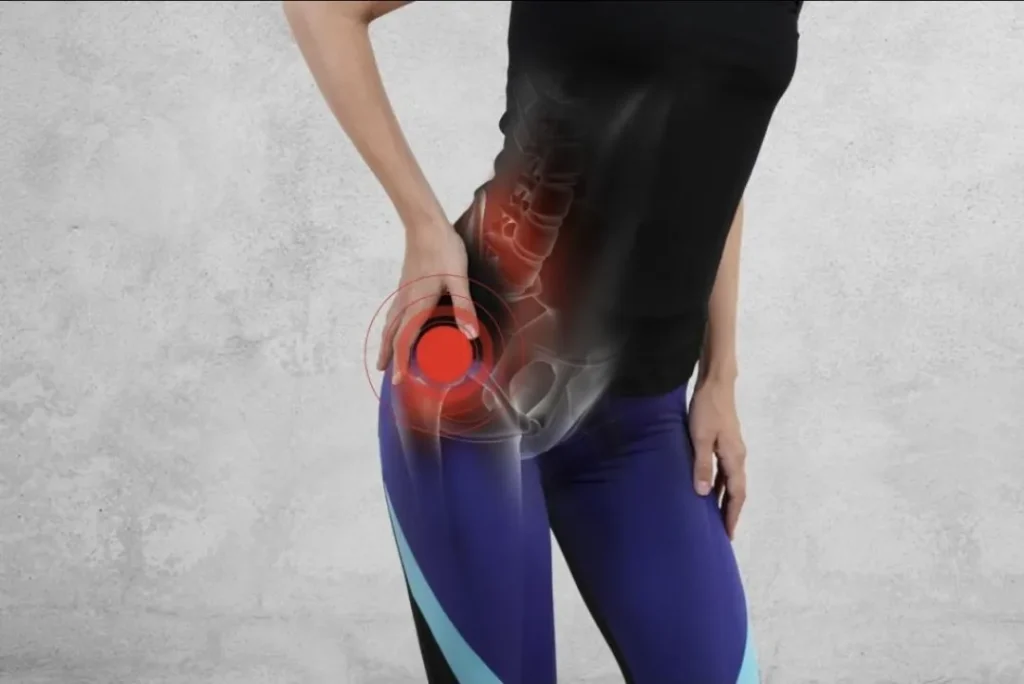
Burning pain in the hip often reflects nerve sensitivity or irritated soft tissues around the joint. It’s not always hip bursitis, though hip bursitis is one of the common causes. It’s not necessarily arthritis. And in most cases, it’s very treatable with the right plan.
That said, some burning hip pain patterns do warrant a closer look. A small number of cases involve red-flag symptoms that need prompt medical attention rather than a wait-and-see approach. Knowing the difference can save you time, frustration, and unnecessary worry.
In this article, you’ll learn what burning hip pain typically feels like and where it comes from. We’ll walk through the most common causes, simple self-checks you can try at home, what to do right now to calm symptoms, when it’s time to see a physical therapist, and what treatment actually looks like. You’ll also find answers to the questions Boston-area runners, lifters, and active adults ask most often.

Is Burning Hip Pain Serious?
Most burning hip pain is not an emergency. The majority of cases improve with targeted rehab, activity modifications, conservative home remedies like relative rest, symptom-calming strategies, and keeping moving within tolerable limits, along with over-the-counter pain medications as needed.
However, seek urgent medical care if you experience any of the following red-flag signs:
-
Significant trauma such as a fall from height or car accident
-
Inability to bear weight on the affected leg
-
Visible deformity of the hip
-
Fever, chills, redness, warmth, or sudden swelling around the hip
-
Progressive muscle weakness or numbness spreading down the leg
If in doubt, urgent care is the safer call.
Persistent or worsening symptoms shouldn’t be ignored, because early intervention usually leads to faster recovery.
Common, non-urgent situations include burning on the outer hip after a long walk, a hot ache deep in the groin after heavy squats, or a mild burning sensation down the upper outer thigh when you’ve been standing at your desk for hours. These patterns are frustrating, but they’re typically mechanical in nature and respond well to the right approach.
What Burning Hip Pain Feels Like: Common Patterns
The word “burning” can describe several different things: nerve irritation, inflamed tendons, or overloaded soft tissues around the hip. Where you feel the burning and when it flares up often gives strong clues about what’s driving the problem.
-
Burning with skin sensitivity or tingling patches leans toward nerve involvement.
-
Burning right over the bony outer hip when lying on it leans toward lateral hip tendons or bursitis.
-
Burning deep in the groin with catching or clicking sensations leans toward joint or labral issues (though not diagnostic on its own).
Burning on the outside of the hip and upper outer thigh is one of the most common patterns. You might notice it gets worse when lying on that side at night, climbing stairs, standing on one leg to put on pants, or after long walks. This area is home to the gluteal muscles and tendons, and when they’re irritated, the pain can feel hot, sharp, or even electric.
Burning deep in the front of the hip or groin is a different story. This type often shows up during squats, lunges, sitting in the car for a long commute, or high-knee running drills. It can feel like a deep pain with a burning edge, sometimes with a catching or pinching sensation. People often describe it as being “inside” the hip socket.
Burning that spreads down the outer thigh toward the knee tends to feel more surface-level, like hot or tingly patches on the skin. It’s often worse with tight waistbands, heavy belts, or long periods of standing. This pattern points toward the lateral femoral cutaneous nerve rather than the hip joint itself.
Burning with tingling or numbness that travels past the knee toward the foot suggests something different again. This may involve a pinched nerve in the lumbar spine or around the pelvis, and it usually benefits from a skilled exam to sort out what’s being compressed and where.
Common Causes Of Burning Pain In The Hip
Think of this section as a systems check. These are the most frequent diagnoses physical therapists see in active adults with burning hip pain.
More than one structure is often involved. You might have an irritated hip bursa combined with weak gluteal muscles and tight hip flexors. Or a labral tear alongside poor trunk control and stiff thoracic spine. Self-diagnosing from Google often misses these connections, which is why an in-person assessment is so valuable.
The major buckets include outer-hip tendon and bursa problems, hip joint and labrum issues, nerve-related pain, and contributors from the low back and pelvic bone. Below, we’ll break down each one so you have a sense of what might be going on.
The goal here is education, not a definitive diagnosis. Use this information to guide your next steps, not replace an evaluation.
Outer Hip Pain: Gluteal Tendinopathy And Bursitis
The gluteus medius and minimus muscles attach to the greater trochanter, the bony bump on the outside of your hip bone. When the tendons here get irritated, whether from overuse, compression, or both, the result is often a burning or sharp pain right at that outer hip.
For years, this was labeled trochanteric bursitis, and many people still use that term. But research now shows that true inflammation of the hip bursa is only part of the picture. Many cases involve degenerative changes in the gluteal tendons themselves, a condition called gluteal tendinopathy. The clinical cluster is often referred to as greater trochanteric pain syndrome.
Common triggers include increasing walking or running mileage too quickly, side-sleeping on a firm mattress, crossing your legs at your desk, standing with your hip jutting out to one side, or tackling hill training along the Charles River path without adequate preparation. Runners and hikers are particularly susceptible.
Symptoms typically include burning or achy pain when lying on that side at night, tenderness to touch over the outer hip, a consistent pain after long periods of standing or walking, and discomfort with single-leg stance. The pain can radiate down the outer thigh but rarely goes below the knee.
The good news: these issues typically respond well to activity modification and progressive strengthening of the hip muscles. Rest alone usually isn’t the answer. If pain wakes you every night for several weeks and isn’t improving, it’s worth getting an assessment to rule out other contributors.

Hip Flexor Overload And Front-Of-Hip Burning
Tight or overworked hip flexors, especially the iliopsoas, can create burning pain at the front of the hip or deep groin. This is common in people who sit a lot, run hills frequently, or do repetitive kicking and sprinting.
A classic scenario: you’re a Boston office worker who sits for eight hours, then rushes to the gym for a high-intensity session. Or you’re a cyclist putting in long weekend miles without enough hip extension mobility work. Or you’re a weekend warrior who just started sprint intervals after months of easy jogging.
Typical symptoms include burning or pinching at the front of the hip during high-knee movements, difficulty lifting your leg into the car, and discomfort when walking uphill or climbing stairs. The burning may be most noticeable when the hip flexor is contracting hard or being stretched at end range.
Here’s the thing: these issues are often tied to core abdominal muscles and glute weakness, not just “tight” hip flexors. The tightness is frequently a compensation for lack of stability elsewhere. A simple self-check is to pull one knee toward your chest while lying on your back and compare sides. If the affected hip feels more restricted, pinchy, or burns with that movement, hip flexor involvement is likely.
Gentle, symptom-guided mobility of hip flexors, piriformis, and glutes may relieve pressure on nerves or tight tendons if it feels better; stop if it burns or tingles more.
Hip Joint Irritation, Labral Tears, And Impingement
Your hip is a ball and socket joint, one of the largest weight-bearing joint structures in your body. The femoral head (the ball at the top of your thigh bone) fits into the hip socket in your pelvic bone. A ring of cartilage called the labrum lines the socket to help keep the hip stable and absorb shock.
Femoroacetabular impingement, or FAI, occurs when shape differences in the ball and/or socket increase contact. This can irritate the joint cartilage and labrum over time, creating deep aching or burning in the front of the hip or groin. It’s common in athletes who do a lot of squatting, pivoting, and rotational movements.
Signs of hip impingement or a hip labral tear include deep pain with deep squats, twisting, or pivoting on one leg. You might notice clicking or catching sensations, or stiffness after sitting through a game at Fenway Park or a long commute. The burning may feel like it’s coming from inside the hip socket rather than the muscles around it.
A hip labral tear occurs when the ring of cartilage that stabilizes the hip joint is damaged. Labral tears can occur gradually from repeated impact in running, hockey, soccer, or CrossFit, or after a specific twist or trauma. Many people describe a sharp or burning pain plus a feeling of the hip giving way or being unstable.
Imaging like magnetic resonance imaging (MRI) is sometimes used to confirm a labral tear. But many people do well with high-quality movement-based rehab before considering injections or surgery. Surgery options like hip arthroscopy or replacement are reserved for cases with structural damage that do not respond to other treatments. If groin or deep hip burning persists beyond four to six weeks despite rest and basic mobility work, it’s time to see a professional.
Nerve-Related Burning: Lateral Thigh And Leg Symptoms
Not all burning hip pain comes from the hip joint or the soft tissues around it. Sometimes the culprit is a nerve.
Meralgia paresthetica is a condition caused by irritation of the lateral femoral cutaneous nerve, which runs over the front and outer thigh. When this nerve gets compressed or irritated, you feel a burning sensation, tingling, or numb patches on the outer thigh. There’s usually no deep pain in the hip joint itself.
Typical aggravators include wearing tight clothes like compression shorts or jeans, heavy tool belts, weightlifting belts cinched too tight, pregnancy, or sudden increases in body weight. Office workers who wear fitted pants and sit for long periods are also at risk.
A pinched nerve in the low back is another common source of burning leg symptoms. Disc irritation, arthritis, or foraminal narrowing in the lumbar spine can create burning, tingling, or electric pain that radiates from the back or buttock through the hip and down the leg. Sciatica can cause burning pain that radiates through the hip and down the leg due to lower back nerve compression. Sometimes this comes with weakness or changes in reflexes.
Red flags for nerve compression include progressive leg weakness, trouble lifting your foot when walking, burning plus saddle numbness (the area around your groin and inner thighs), or changes in bowel or bladder control. If you notice any of these, seek urgent medical attention rather than waiting for a PT appointment.
Referred Pain From The Low Back And Sacroiliac Joint
Here’s something that surprises many people: burning hip pain doesn’t always come from the hip. Arthritic changes or disc issues in the lumbar spine, or inflammation in the sacroiliac joint, can be felt around the hip, buttock, or outer thigh.
Sacroiliac joint pain can cause a burning sensation or stiffness in the pelvic region. Classic patterns include pain that worsens with prolonged standing, walking downhill, or getting in and out of the car. You might notice burning near the dimple area of the low back that radiates toward the hip.
The ligaments surrounding the SI joint and the muscles of the hip and trunk are all connected. Sacroiliac joint dysfunction, lumbar disc issues, and hip problems often coexist, which is why a whole-body movement assessment is more useful than just looking at one joint on an X-ray.
Physical therapists in an outpatient setting routinely evaluate both the spine and hip together when symptoms overlap. It’s one of the reasons a comprehensive exam beats isolated imaging.
Self-Checks You Can Try At Home (Without Making Things Worse)
These self-checks are meant to give you information, not a diagnosis. Don’t force anything into pain. If symptoms spike, stop immediately and consider scheduling an evaluation.
-
Single-Leg Stance Check: Stand on the painful side for 10 to 20 seconds. Notice if burning increases, if your hip drops on the opposite side, or if your balance is noticeably poor compared to standing on the other leg. Difficulty here often points to gluteal muscle weakness or hip control issues.
-
Side-Lying Test: Lie on the painful side for 30 to 60 seconds, then roll onto the opposite side. Does burning increase when pressure is directly on the outer hip? How quickly does it ease when you roll off? If lying on that side reliably triggers the burning, lateral hip overload is likely.
-
Gentle Squat Or Sit-To-Stand Test: Perform a slow squat or rise from a chair without using your hands. Watch for deep hip burning, groin catching, or if you shift your weight away from the painful side. These patterns often point toward hip joint or labral involvement.
-
Nerve Symptom Check: Sit on the edge of a chair and slowly straighten your knee, pointing your toes up. If burning or tingling travels down the back of your leg toward your foot, a nerve may be involved. Stop immediately if symptoms spike. This isn’t a treatment, just a way to gather information.
What To Do Right Now If Your Hip Is Burning
The goal is to calm symptoms without fully shutting down movement. Complete rest rarely helps active adults and can actually prolong recovery.
Start with short-term activity modifications. Temporarily reduce high-impact workouts, long hill walks, deep squats, or side-lying positions that clearly provoke the burning. You don’t have to stop everything, just dial back the specific aggravators.
Swap in lower-load options that keep you moving. Flat walks instead of hills. Cycling with a comfortable seat height. Pool walking or swimming. Gentle, symptom-guided mobility sessions. These alternatives maintain fitness while giving irritated tissues a break.
Simple comfort strategies can make a big difference. Use a pillow between your knees when side-lying. Avoid crossing your legs at your desk. Adjust your chair height so your hips aren’t flexed past 90 degrees. If you have outer thigh burning, try wearing loose clothing and avoiding tight waistbands or belts. Adjusting sleep positions and avoiding crossing legs may help reduce nerve irritation causing burning sensations in the hip.
Over-the-counter anti-inflammatories like ibuprofen or naproxen can help reduce pain and relieve severe inflammation for some people. Ice after activity or heat for stiffness may also provide relief. Check with a physician or pharmacist about medication safety, especially if you have other health conditions.
Resting the affected area can facilitate healing from burning hip pain.
If symptoms persist beyond a week or two, or keep returning every time you try to ramp up activity, it’s time to get a professional assessment.
When It’s Time To See A Physical Therapist (And When To See A Doctor First)
Physical therapy is often a first-line choice for non-traumatic burning hip pain that has lasted more than 10 to 14 days, keeps returning with activity, or limits your training, walking, or sleep.
Seeing a PT directly makes sense when your pain came on gradually from running or lifting, changes with certain positions or movements, or improves somewhat with gentle activity. A physical or occupational therapist can evaluate movement patterns, identify weak links, and build a plan to treat hip pain at its source.
See a medical doctor or urgent care first if you’ve had a significant fall or collision, have sudden inability to bear weight, notice visible hip deformities, have fever or chills with a hot and swollen hip, or are experiencing progressive weakness or numbness. If pain medications failed to touch severe pain after trauma, that’s another reason to seek medical evaluation before PT.
Direct access is available in many cases in Massachusetts, and our team can help you confirm what your insurance requires. If imaging or further workup is needed, your PT can coordinate with local physicians or orthopedists in Boston to get you the right care.
How Physical Therapy Helps Burning Hip Pain
Physical therapy identifies the true driver of your burning pain, whether it’s the hip joint, tendons, a nerve, or a movement pattern issue, and builds a specific plan rather than handing you generic stretches.
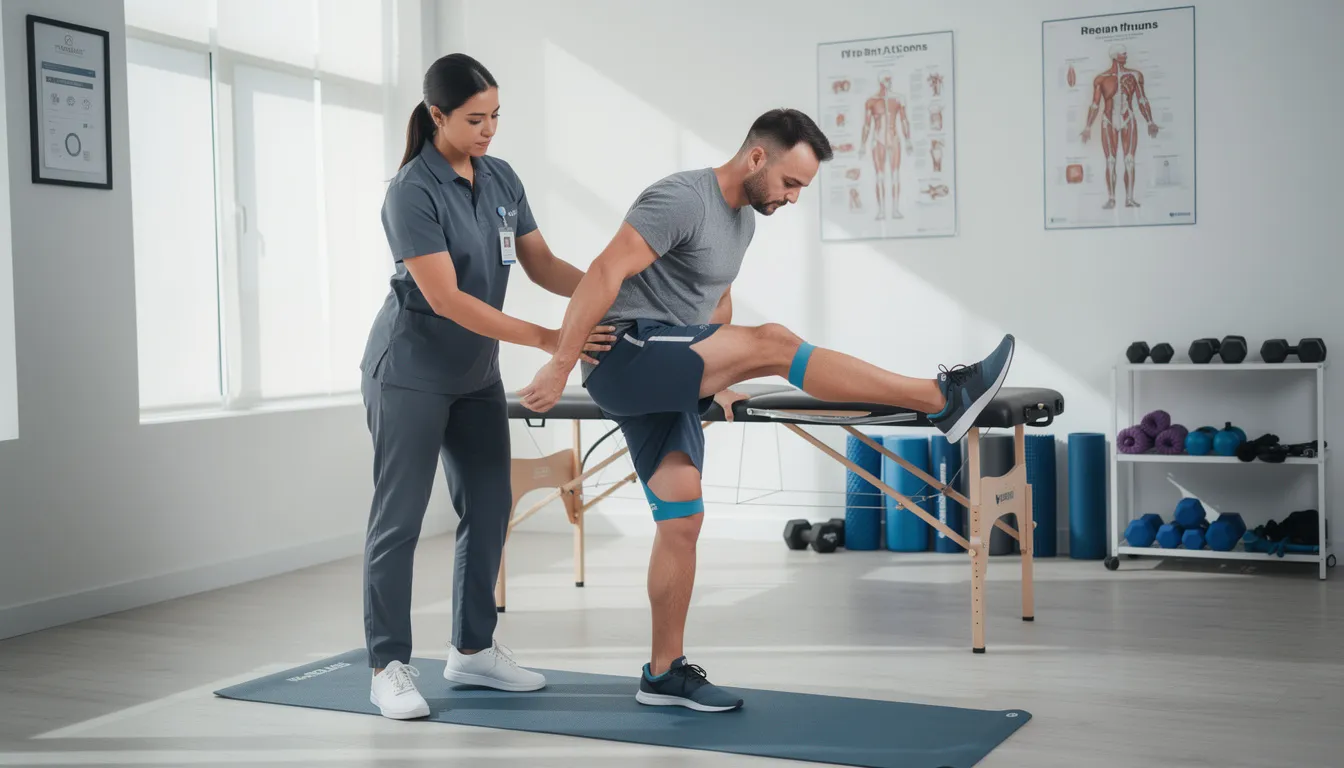
The first visit typically includes a detailed conversation about your training history, daily routines, and what makes symptoms better or worse. You’ll go through a movement assessment that might include squats, walking, single-leg tasks, and functional movements relevant to your sport or job. Strength and mobility testing for the hips, core muscles, and spine rounds out the evaluation.
Treatment often includes manual therapy like joint and soft tissue work to improve mobility and reduce pain. But the emphasis is on active interventions: individualized strengthening, mobility exercises, and neuromuscular control drills for the hip and core.
The focus is on progressive loading of the gluteal muscles and hip muscles, not passive treatments like ultrasound or TENS. This approach helps you return to running, lifting, and sport with confidence rather than just temporary relief.
A PT in Boston will also look at factors outside the clinic: your running shoes, typical routes (frequent hills or cambered surfaces), gym programming, and work setup. Addressing these can prevent the same problem from coming back.
Strength, Mobility, And Control: Key Rehab Ingredients
A typical plan for outer-hip or labral-related burning includes progressive hip abductor and extensor strengthening, trunk stability work, and controlled range of motion exercises.
Strength exercises often start with isometrics and side-lying hip abduction, then progress to banded lateral walks, bridges, hip thrusts, split squats, step-downs, and single-leg balance drills. The goal is building muscle strength in the glutes and hip stabilizers so the hip can handle your training demands.
Mobility work is targeted based on what the assessment shows is limited. This might include hip flexor stretching, adductor mobility, or gentle rotation work. If you have tight muscles in specific areas, those get addressed. If range of motion is normal, we don’t waste time stretching things that don’t need it.
Control drills re-train how your hip loads during running, squatting, stair climbing, and sport-specific movements. Video feedback and verbal cueing help you feel the difference between a strained muscle compensation pattern and efficient movement. This is often the piece that prevents reinjury.
Strengthening the core abdominal muscles can help restore balance to the body and alleviate burning hip pain.
Stretching can relieve tension in tight muscles and help manage burning hip pain.
Modifying Your Training Without Losing Fitness
One of the biggest fears for active adults is losing fitness while dealing with hip injuries. A good PT helps you adjust training while your hip calms down, rather than telling you to stop everything.
For runners, this might mean reducing weekly mileage but keeping some easy, flat runs. For lifters, it could mean modifying squat depth or load, swapping box jumps for sled pushes, or temporarily emphasizing upper body work. Cyclists might adjust seat height or reduce hill intervals.
Carefully planned “reload” phases usually shorten recovery time compared to pure rest. You maintain cardiovascular fitness, preserve muscle strength, and avoid the psychological frustration of complete shutdown.
Training modifications are individualized based on your sport season, age, goals, and current pain irritability. If you’re training for a spring race, the plan looks different than if you’re in an off-season. If left untreated the pain can worsen and sideline you longer, so strategic modification beats both ignoring the problem and stopping entirely.
How Long Does Burning Hip Pain Take To Get Better?
Timelines depend on the specific diagnosis, how long symptoms have been present, and how consistently you follow your rehab plan.
Mild overuse-related tendon irritation often improves in four to six weeks with consistent loading progressions and activity modification. More persistent gluteal tendinopathy, moderate burning sensation patterns, or labral-related pain can take 8 to 16 weeks for solid improvement.
Nerve-related burning like meralgia paresthetica often improves over several weeks once the irritation is reduced. This might mean changing belts or clothing, improving core and hip control, and addressing prolonged standing habits. Some residual sensory changes may linger, but the burning typically calms significantly.
Factors that slow recovery include continuing aggravating activities at full volume, inconsistent home exercise follow-through, smoking, uncontrolled diabetes, or significant sleep disruption. If you’re doing everything right and not improving, further investigation may be needed.
Most active adults can return to running, lifting, and recreational sports with a clear plan and gradual progression, even if symptoms have lingered for months. The key is identifying the right problem and loading tissues appropriately rather than hoping rest alone will fix a mechanical issue.
Frequently Asked Questions About Burning Hip Pain
Does Burning Hip Pain Always Mean A Nerve Problem?
Not necessarily. While nerve irritation often creates a classic burning sensation, overloaded tendons and inflamed bursae can also produce burning. The location, associated symptoms (like numbness or tingling), and aggravating factors help differentiate. A mild burning sensation over the outer hip with no numbness is more likely tendon or bursa related than nerve.
Can I Keep Running Or Walking With Burning Hip Pain?
Often yes, at a modified level. Pain that stays mild (around 2 to 3 out of 10), improves with warm-up, and settles within 24 hours is generally acceptable to work through. Pain that spikes to 6 or 7 out of 10, makes you limp, or gets worse the day after suggests you need to cut back and get an assessment. If you’re unable to walk without pain, that’s a clear sign to stop and seek help.
Do I Need An X-Ray Or MRI For Burning Hip Pain?
Not usually as a first step. Many soft tissue issues and even some labral problems improve with PT alone. X-rays may be used if fracture or advanced arthritis is suspected. Hip arthritis is more common with age, but not limited to older adults. MRI is typically reserved for persistent pain despite appropriate rehab, or when surgery is being considered. Your PT can help determine if imaging would change your treatment plan.
How Can I Reduce Burning Hip Pain At Night?
If you have outer hip burning, avoid sleeping directly on that side. Place a pillow between your knees to reduce compression on the lateral hip. A medium-firm mattress often works better than very soft or very hard surfaces. If front-of-hip burning wakes you, a pillow under your knees while on your back can reduce hip flexor tension. Experiment with positions to find what keeps the hip warm but not compressed.
Does Age Or Arthritis Mean I Just Have To Live With Burning Hip Pain?
No. While osteoarthritis and age-related changes can contribute to hip joint irritation, exercise and strength training consistently reduce symptoms in research studies. Many active adults with hip OA continue running and lifting with appropriate load management. If raw bone beneath worn joint cartilage is present on imaging, that doesn’t mean you’re destined for a hip replacement or intense pain. Targeted rehab can often alleviate pain and improve function significantly.
What If I’ve Had Previous Spine Surgery Or Hip Related Surgery?
Prior surgery doesn’t rule out conservative treatment for new burning hip pain. However, it’s worth mentioning your surgical history to your PT so they can rule out hardware issues or complications. If you’ve had a hip replacement and develop new burning, your surgeon should be consulted to ensure the joint supports are intact and there’s no infection or loosening.
Ready To Tackle Burning Hip Pain? How Sustain Physical Therapy & Performance Can Help
Persistent burning hip pain is not something you have to just live with. Whether you’re a runner sidelined by outer hip burning, a lifter frustrated by groin pain during squats, or an office worker whose thigh burns every time you stand at your desk, there’s a path forward.
An evaluation at Sustain Physical Therapy & Performance includes one-on-one sessions with a physical therapist, a thorough movement assessment, and a customized plan that fits your sport, work, and life demands. We look at the whole picture, from your healthy hip joint and affected hip to your spine, core, and training habits, so we can address the actual problem rather than chasing symptoms.
If you’re in Boston or the surrounding communities and ready to get back to the activities you enjoy, reach out to schedule an in-person evaluation. You can also book a brief phone consult to discuss your specific symptoms and goals before coming in. Either way, the first step is understanding what’s driving the burning and building a plan to fix it.