You’ve been dealing with that nagging knee pain for weeks, or maybe your shoulder flares up every time you throw. You’ve tried rest, ice, and stretching videos, but nothing sticks, and you’re losing training days you can’t afford to lose. The best sports physical therapist understands your sport’s demands, uses objective testing to track progress, …

You’ve been dealing with that nagging knee pain for weeks, or maybe your shoulder flares up every time you throw. You’ve tried rest, ice, and stretching videos, but nothing sticks, and you’re losing training days you can’t afford to lose.
The best sports physical therapist understands your sport’s demands, uses objective testing to track progress, and builds a personalized rehab plan focused on safely returning you to peak performance. They prioritize hands-on, active sessions tailored to your goals, not just basic daily function.
What Makes the Best Sports Physical Therapist for Me?
The best sports physical therapist for you understands the specific demands of your sport or activity, uses objective testing to track your progress, and builds a personalized, progressive rehab plan tailored to your goals. They prioritize direct care and focus on safely getting you back to your highest level of performance. Many athletes prefer more direct time with a licensed physical therapist, especially early on or when returning to sport, to ensure expert guidance throughout their recovery.
What Makes A Sports Physical Therapist Different?
Standard physical therapy often focuses on getting patients back to basic daily activities. Can you walk without limping? Can you climb stairs? Can you reach overhead to grab something from a shelf? For most people recovering from surgery or managing chronic conditions, that’s enough.
Sports physical therapy operates on a different standard. The goal is not just pain-free walking. It’s cutting hard on a soccer field, sprinting the final stretch of a race, lifting heavy without compensation, or landing from a jump without your knee buckling. A sports physical therapist builds rehab around the specific demands of your sport, not just the minimum threshold for daily life.
This requires training beyond the standard Doctor of Physical Therapy degree. Many sports PTs complete an accredited sports residency, which involves 12 to 18 months of intensive mentored work with athletes, including sideline coverage at games and events. Others pursue the Sports Clinical Specialist credential through the American Board of Physical Therapy Specialties, which requires 2,000 hours of direct sports physical therapy patient care and documented experience managing acute injuries at athletic venues. Many sports physical therapists are also board certified orthopedic specialists, demonstrating advanced expertise in musculoskeletal care.
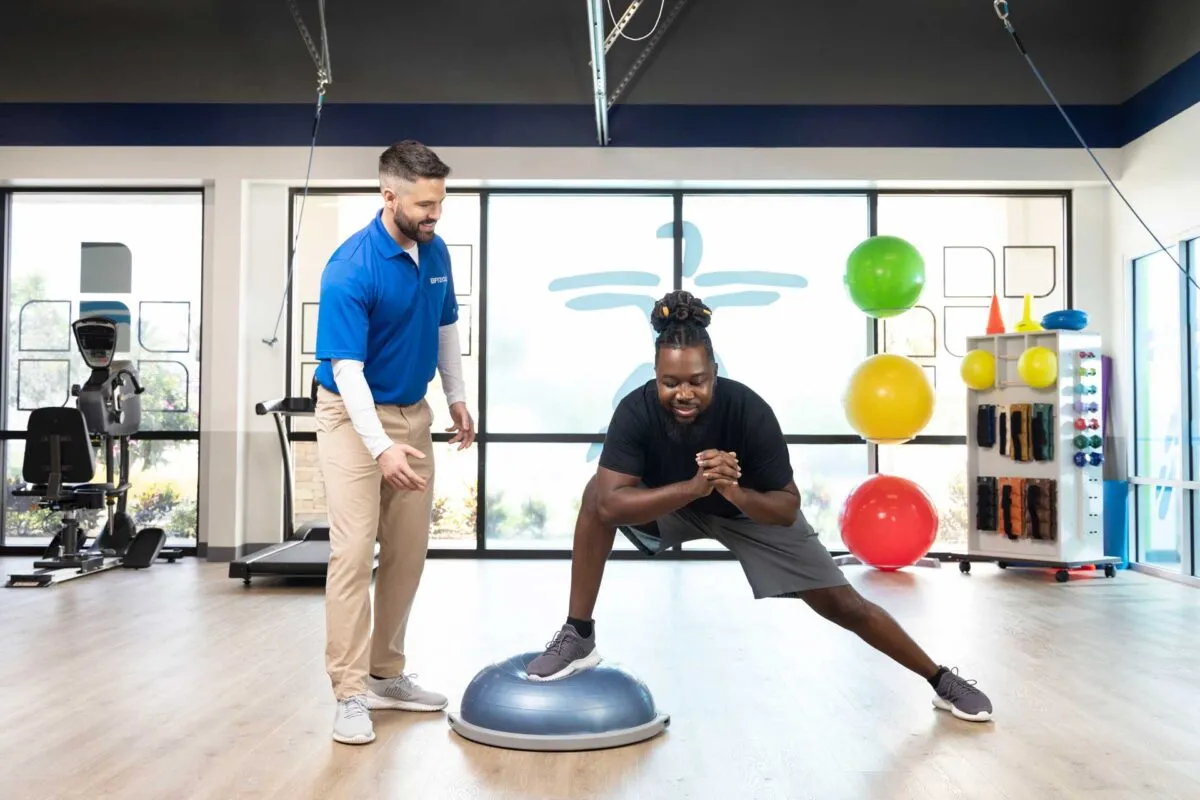
Look for a sports physical therapist with sport-specific experience, strong communication skills, an individualized approach, and relevant certifications like SCS or manual therapy credentials. These credentials are nice signals of specialization, but the real test is their use of objective measures, progressive loading, and sport-specific planning to guide your recovery safely and effectively.
Some sports PTs also hold certifications in strength and conditioning, running gait analysis, or manual therapy techniques. What matters most is that their practice focuses on athletes and active adults, not a mixed caseload of post-surgical knees, stroke recovery, and occasional weekend warriors.
A good sports PT session should look active. You should spend time on your feet, doing strength work, power drills, and sport-specific movements. Passive modalities like heat packs and ultrasound might play a small role, but they should not dominate your treatment. The session should feel like guided training, not lying on a table waiting for something to happen.
Effective sports therapists also address the psychological challenges of injury recovery helping you overcome fear of reinjury, rebuild confidence in cutting, jumping, or throwing, and safely progress exposure to sport-specific movements.
This approach benefits both competitive athletes chasing personal records and active adults who want to keep hiking, playing pickup basketball, or chasing their kids without pain. The principles are the same: build capacity, address weaknesses, and progress toward your specific goals.
Sports physical therapy can benefit people of all ages and fitness levels, including individuals with physically demanding jobs such as firefighters and law enforcement. This broad applicability underscores the importance of specialized care tailored to unique activity demands.
Step-By-Step: How To Choose The Right Sports PT For You
Before you book an appointment, run through this practical checklist. A few minutes of research can save you weeks of frustration with the wrong provider.
Start by reviewing credentials and sports background. Check that the therapist holds an active license in your state and graduated from an accredited program. Then look for markers of sports specialization. A Sports Clinical Specialist credential is a strong signal. Completion of an APTA-accredited sports residency is another. Years of experience working with athletes at your level, whether recreational, high school, collegiate, or professional, also matters. Many sports physical therapists have experience working with elite athletes at various levels, which can be critical for understanding the unique needs of high-performance individuals.
Next, understand their treatment style. Browse the clinic’s website for mentions of specific sports, performance testing, or strength and conditioning programs. Look for language about return-to-sport progressions, load management, and movement analysis. If the website reads like a generic rehab mill focused on worker’s compensation cases and post-operative protocols, it might not be the right fit for an athlete.
Confirm appointment structure before booking. Call the clinic and ask direct questions. How much of my session will be spent with a licensed physical therapist versus aides or assistants? Do you write return-to-sport plans with objective criteria for advancing phases? How do you progress athletes back to competition? What equipment do you have for sport-specific drills? Clinics often have equipment like squat racks, open space for plyometric drills, and tools such as dynamometers to assess strength and function.
In a busy sports community, it’s also worth asking about wait times and scheduling flexibility. If you’re in-season and need to work around practices and games, make sure the clinic can accommodate that.
Finally, know that it’s okay to switch clinics if the fit isn’t right. If you’re several weeks in and still doing the same exercises without clear progress or updated goals, that’s a sign to reassess. The right therapist collaborates with you, explains the reasoning behind each phase, and adjusts the plan as you improve.
Questions To Ask Before You Book
- How do you decide I’m ready to return to sport?
- Do you use hop testing, dynamometry, or other objective measures?
- How much one-on-one time will I get with the licensed physical therapist?
- What does a typical week of rehab look like for my sport?
- Do you collaborate with my coach, athletic trainer, or physician as needed?
- What equipment or technology do you use for sport-specific rehab?
- How do you manage load progression to avoid setbacks?
- What is your experience working with athletes at my level?
- How flexible are scheduling options during my competitive season?
Common Sports Injuries (And What Good Rehab Looks Like)
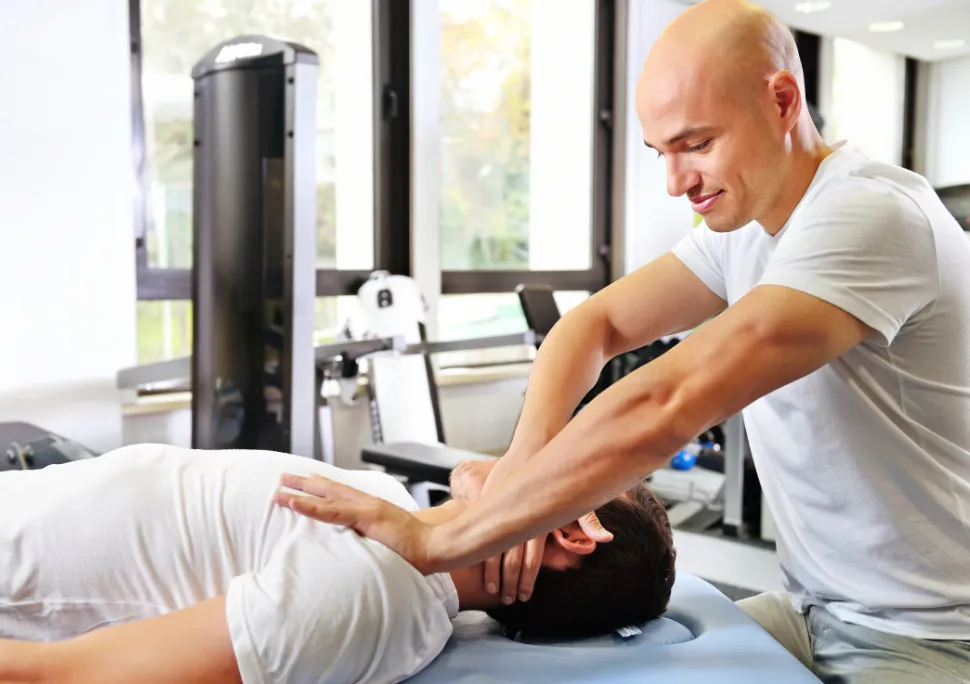
The right sports physical therapist should recognize patterns in common injuries and know exactly how to guide recovery while preventing recurrence. Here’s what high-quality care looks like for some of the injuries athletes deal with most often.
Patellar Tendinopathy In Runners And Jumpers
This condition, sometimes called jumper’s knee, involves pain at the front of the knee where the patellar tendon connects to the kneecap. A thorough evaluation includes assessing single-leg strength, hop capacity, running mechanics, and training load history. Treatment focuses on progressive loading of the tendon through targeted exercises like heavy slow resistance work and eventually plyometrics. The therapist should modify your running or jumping volume rather than stopping all activity.
Rotator Cuff Issues In Overhead Athletes
Baseball players, swimmers, volleyball players, and tennis players frequently deal with shoulder pain from repetitive overhead motions. Evaluation should include strength testing of the rotator cuff and scapular muscles, range of motion assessment, and analysis of throwing or serving mechanics. Treatment involves strengthening the rotator cuff and surrounding muscles, improving scapular control, and gradually reintroducing overhead activity with attention to technique and workload.
Low Back Pain In Lifters
Deadlifts, squats, and Olympic lifts place significant demands on the spine. When pain develops, a good sports PT assesses lifting form, hip and thoracic mobility, core stability, and training programming. Rehabilitation includes targeted strengthening, movement pattern correction, and a graded return to lifting with appropriate modifications. The goal is getting back under the bar safely, not avoiding the gym.
Ankle Sprains In Field And Court Sports
Soccer, basketball, and lacrosse players commonly roll an ankle during cutting or landing. Evaluation should test stability, strength, and balance. Treatment progresses from restoring range of motion to strengthening the ankle and hip, improving proprioception through balance drills, and eventually sport-specific agility work. Inadequate rehab is a major reason ankle sprains become chronic ankle instability.
While generic rest and passive treatments might offer short-term relief, the right sports PT builds a progressive plan that matches the demands of your practices, games, or events. Reducing pain is one piece. Restoring performance and preventing reinjury is the complete care that athletes need.
One important note: sudden severe pain, large swelling, or inability to bear weight should trigger an urgent check with a medical provider before starting rehab. A good therapist will help you navigate when imaging or physician evaluation is needed.
When To See A Sports PT (Or A Physician First)
Many athletes wait too long, hoping that nagging pain will disappear on its own. Sometimes it does. But when it doesn’t, the delay can, in some cases, prolong recovery and create compensation patterns that lead to new problems.
Consider booking with a sports physical therapist when pain lasts beyond a few days without meaningful improvement, or when discomfort returns every time you increase training volume or intensity. Also consider care if pain changes your movement, whether that’s limping during a run, favoring one side during lifts, or losing confidence in a previously reliable motion. If you find yourself modifying every workout or skipping sessions entirely, it’s time to get assessed.
If you cannot bear weight, have major swelling, or symptoms are worsening, get checked sooner. Some situations require seeing a physician or urgent care first. Traumatic injuries that involve a pop, crack, or immediate instability belong in this category. Obvious deformity suggesting a fracture or dislocation needs immediate medical attention. Major loss of strength, numbness radiating down an arm or leg, or loss of bowel or bladder control are serious neurological signs. Night pain that wakes you from sleep and doesn’t ease with position changes warrants further workup.
If symptoms are worsening, severe, or limiting function, get assessed sooner. A good sports physical therapist will communicate with physicians, discuss cases when appropriate, and help you decide if imaging or additional medical evaluation is needed.
What To Expect From Your First 2–4 Visits With A Performance-Focused PT
Walk into a high-quality sports PT clinic and expect active sessions, clear goals, and homework that fits your training schedule. This is not a place where you spend most of the time lying on a table waiting for passive treatments to work.
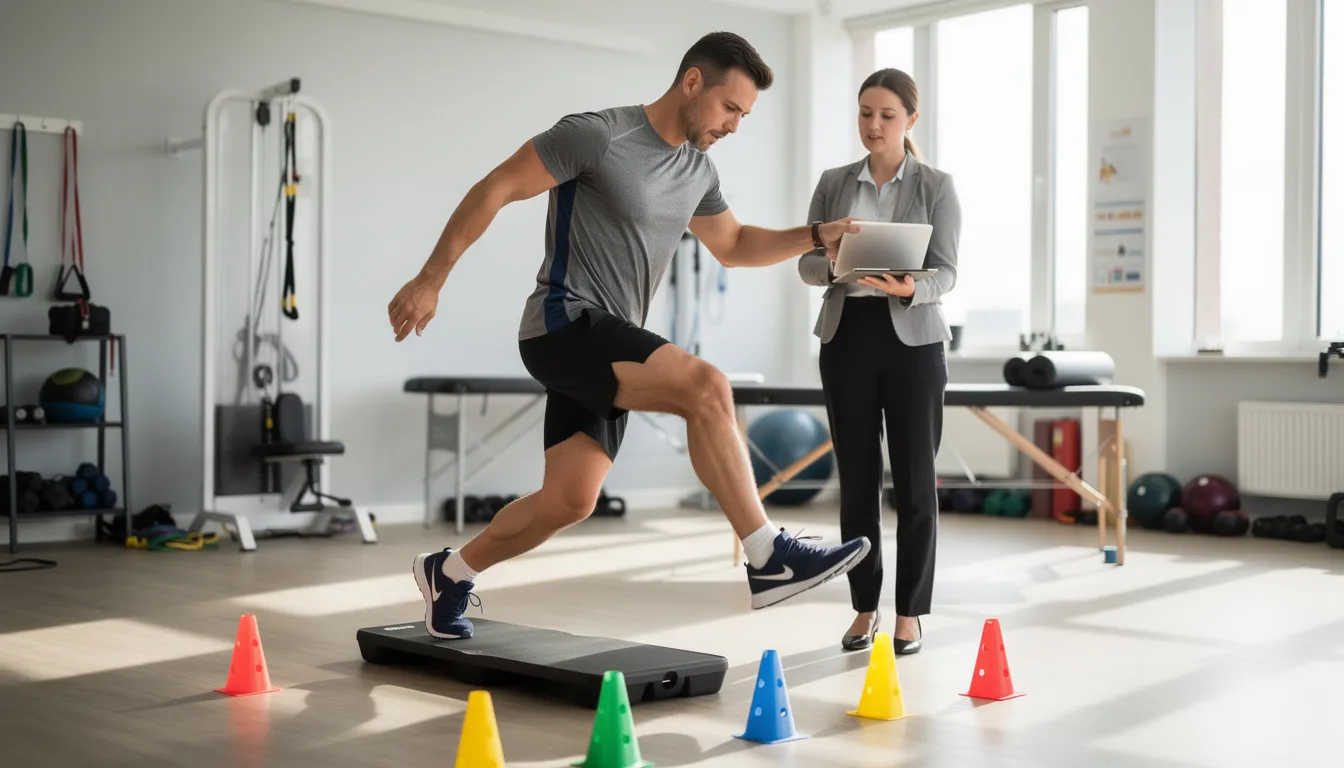
The first visit should feel thorough. The therapist will take a detailed history covering your injury, training changes leading up to it, previous injuries, sleep, stress, and your specific goals. They’ll perform a movement screening that goes beyond basic range of motion to include squats, lunges, single-leg balance, and sport-specific patterns. Strength testing with manual techniques or equipment provides objective data. By the end, you should understand the diagnosis in everyday language, the expected recovery trajectory, and the initial plan.
Weekly sessions should feel like progressive training. Each visit should build on the last, with exercises that become more challenging as you improve. Early phases might focus on pain modulation and restoring mobility. Middle phases emphasize strength, stability, and neuromuscular control. Later phases introduce power, plyometrics, and sport-specific drills. Your home programming should be updated regularly, not photocopied from a generic sheet.
For many overuse injuries, expect 1 to 2 visits per week for 4 to 8 weeks. Post-surgical cases require longer timelines, sometimes 6 to 12 months. The therapist should set clear benchmarks for each phase and explain what milestones you need to hit before progressing.
When appropriate, expect your therapist to collaborate with your coach, athletic trainer, or strength coach as needed. Good sports rehab often includes communication with your support team to ensure your rehab fits with practices and competitions. This is especially important during in-season periods when complete rest isn’t realistic.
By the end of treatment, you should feel stronger and more resilient than before the injury. The goal is not just returning to your previous baseline but building capacity that reduces future injury risk. In-clinic work should transition to performance-based training that you can continue independently.
Recovery Timelines: How Fast Can You Get Back To Your Sport?
Return-to-sport is based on testing and tolerance, not a calendar date. Timelines depend on the injury, your training base, and how consistently you follow the plan. But athletes deserve a rough roadmap so they can plan their training and competition schedule.
| Injury Type | Typical Return-to-Sport Timeline |
|---|---|
| Mild ankle sprain | 2–6 weeks |
| Non-surgical knee pain | 4–8 weeks |
| Rotator cuff irritation | 6–12 weeks |
| Post-op ACL reconstruction | 9–12+ months |
| Muscle strains (moderate) | 4–8 weeks |
| Chronic tendinopathy | Months of consistent loading |
These are broad ranges. Clearance should be based on objective strength and sport testing, not the calendar. Your therapist will use hop tests, isokinetic strength measurements, Y-balance assessments, and sport-specific agility drills to guide the decision.
During rehab, you can usually keep doing something. Runners with knee pain might cycle or swim. Athletes with shoulder injuries can often continue lower-body conditioning. Lifters recovering from back pain might train upper body while avoiding spinal loading. A performance-focused PT helps you stay conditioned and engaged in training, modifying movements rather than stopping all activity.
For active adults who simply want to walk, lift, or ski without pain, timelines and goals will match their lifestyle rather than a competitive sport season. The principles remain the same: progressive loading, objective benchmarks, and a plan that respects both your body’s healing timeline and your personal goals.
FAQs: Choosing And Working With A Sports Physical Therapist
Does Insurance Cover Sports Physical Therapy?
Sports physical therapy is still physical therapy from an insurance perspective. Coverage depends on your specific plan, diagnosis, and the clinic’s network status. Some clinics offer longer one-on-one sessions and performance-focused treatment that may differ from high-volume insurance-based models. If your plan limits visits or requires high copays, ask about cash-pay options that provide more flexibility.
Do I Need a Referral to Start Physical Therapy?
Many states allow direct access to physical therapy without a physician referral. However, some insurance plans still require one for coverage. Check your plan details or call the clinic to confirm what’s needed before booking.
Can I Keep Training While Doing PT?
Often, yes. A good sports physical therapist adjusts loads and movements instead of simply stopping all activity. If running aggravates your knee, you might cycle or do pool running while rebuilding strength. If overhead pressing bothers your shoulder, you can often continue lower-body and core work. The goal is maintaining fitness and athletic performance while protecting the healing tissue.
How Do I Know If Physical Therapy Is Working?
Progress shows up as reduced pain during sport, improved strength or mobility, better confidence in the injured area, and clear stepwise advancement toward your goals. Your therapist should track objective measures and explain what’s improving. If you’re several weeks in with no measurable change and no clear explanation, it’s reasonable to ask questions or seek a second opinion.
What’s the Difference Between a Sports PT and an Athletic Trainer?
Athletic trainers specialize in prevention, acute care, and on-field injury management, often working embedded with teams. Physical therapists provide more in-depth rehabilitation across a broader medical scope and typically see athletes in outpatient clinic settings. Some professionals hold both credentials, and the best care often involves collaboration between both.
Ready To Get Back In The Game With Sustain Physical Therapy and Performance?
At Sustain Physical Therapy and Performance, we specialize in personalized sports physical therapy designed to help athletes and active adults recover quickly and safely. Our experienced team works closely with you to develop tailored rehab plans that fit your unique goals and lifestyle. Conveniently located, we offer flexible scheduling to accommodate your busy training and competition calendar. Contact us today to schedule your evaluation and start your journey back to peak performance.