A one-sided ache low in your back or buttock that flares when you stand on one leg, roll over in bed, or load a heavy deadlift or squat usually points to the sacroiliac joint rather than your lower back itself. The right SI joint pain exercises, focused on stability rather than deep stretching, are the …

A one-sided ache low in your back or buttock that flares when you stand on one leg, roll over in bed, or load a heavy deadlift or squat usually points to the sacroiliac joint rather than your lower back itself. The right SI joint pain exercises, focused on stability rather than deep stretching, are the most reliable way to calm this down and get back to training. This guide walks through what the SI joint actually does, the stretches and strengthening moves that help, and how to know when it’s time to bring in a physical therapist.
What Is the Sacroiliac Joint and Why It Hurts
The sacroiliac (SI) joint connects your sacrum, the triangular bone at the base of your spine, to the ilium on each side of your pelvis. It’s a small joint with very little natural movement, but it plays a key part in transferring load between your upper body and your legs every time you walk, run, or lift. SI joint dysfunction affects roughly a quarter of adults with chronic low back pain. SI joint pain usually shows up when the joint becomes irritated from either too much instability (common postpartum or in hypermobile people) or too much repetitive load without enough surrounding muscle support (common in lifters doing heavy deadlifts and squats).
Symptoms of SI Joint Pain
SI joint pain is typically one-sided, sitting low in the back or buttock, sometimes radiating into the back of the thigh in a way that can be mistaken for sciatica. It tends to flare with standing on one leg (getting dressed, climbing stairs), rolling over in bed, or loaded hip hinge movements. Long periods of sitting or standing in one position can also aggravate it. Unlike a disc-related back issue, SI joint pain usually doesn’t come with numbness or tingling down the leg, and it often improves rather than worsens with movement once the joint has enough surrounding support.
Best Stretches for SI Joint Pain Relief
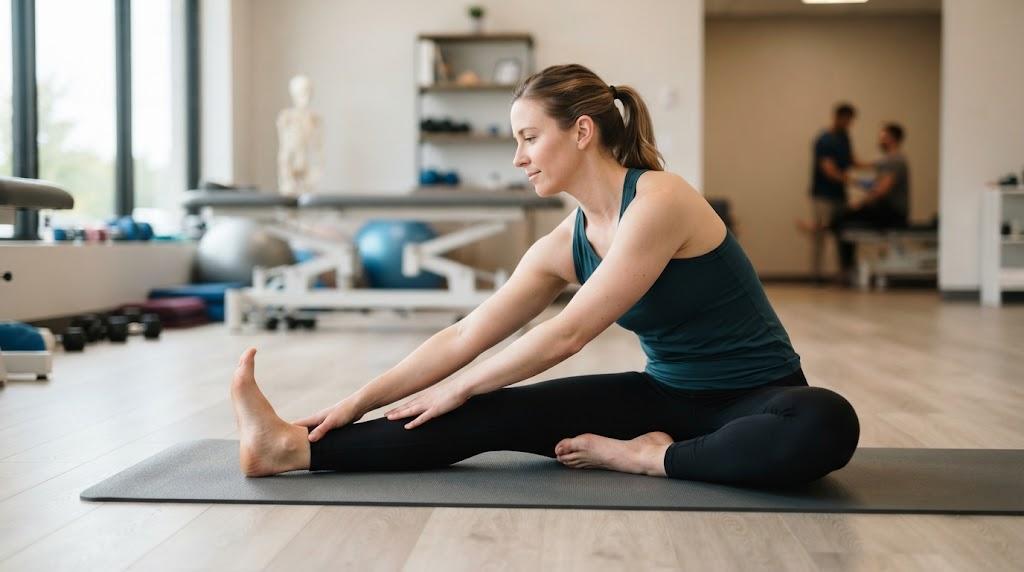
Stretching helps reduce discomfort by easing tension in the muscles around an irritated joint, though the real fix is usually strengthening rather than stretching alone.
Single Knee-to-Chest Stretch
Lie on your back with your knees bent and feet flat on the floor. Bring one knee toward your chest, wrapping both hands around your shin, and gently pull it in until you feel a stretch through the low back and buttock. Hold 20 to 30 seconds, then switch to the other leg. Repeat two to three times per side.
Piriformis Stretch
Still lying on your back with your legs straight, bend one knee and place that foot flat on the floor. Cross the other ankle over that knee, then gently pull the thigh of the bent leg toward your chest. You’ll feel this deep in the buttock of the crossed leg. Hold 20 to 30 seconds per side. Tight hip rotators often compensate for SI joint instability, so this stretch indirectly takes some of the load off the joint. It’s also covered in more depth in our guide to the 10 best exercises for hip pain.
Hamstring Stretch
Lie on your back with one leg extended toward the ceiling (a strap or towel around the foot makes this easier), keeping the other knee bent and that foot flat on the floor. Gently pull the raised leg toward you until you feel a stretch through the back of the thigh. Hold 20 to 30 seconds per side.
Strengthening Exercises for SI Joint Stability
This is the part that does the long-term work: building enough strength around the joint that it no longer relies on ligaments alone for stability.
Bridging
Lie on your back with knees bent and feet flat, hip-width apart. Squeeze your glutes and lift your hips into a straight line from shoulders to knees, then lower slowly. Start with two to three sets of 10 to 15 reps, focusing on pushing evenly through both feet rather than favoring one side.
Bird Dog
Get on your hands and knees in a tabletop starting position. Extend one arm straight forward and the opposite leg straight back at the same time, keeping your hips level and core muscles engaged so your low back doesn’t sag. Hold briefly, then return to start and switch to the other arm and leg. This cross-body pattern directly trains the stability that supports the SI joint during walking and running.
Side Plank
Lie on your side with legs stacked, propped up on one forearm. Lift your hips off the floor until your body forms a straight line from shoulders to feet, holding for 15 to 30 seconds before lowering. If a full side plank is too much initially, drop to your knees to reduce the load while you build strength.
Clamshell
Lie on your side with knees bent and stacked, feet together. Keeping your feet touching, lift your top knee toward the ceiling, then lower it slowly. This targets the hip muscles that help stabilize the pelvis and, by extension, the SI joint itself. Add a resistance band above the knees once bodyweight reps feel easy.
Positions and Movements to Modify
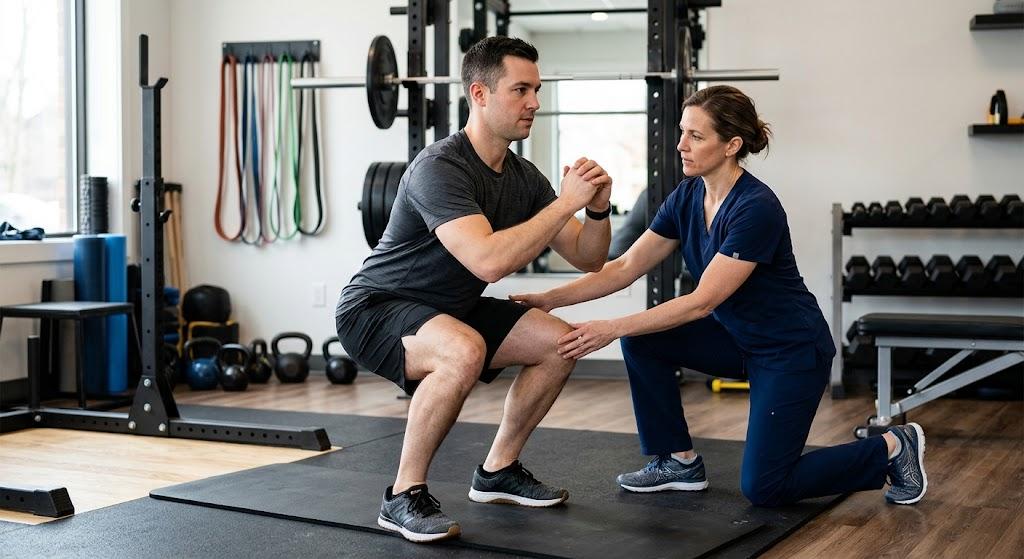
While your SI joint calms down, a few adjustments help prevent flare-ups. Skip standing on one leg for long stretches, like putting on pants or doing one-legged balance work, until symptoms settle. Keep deadlifts and squats lighter and spread the weight evenly through both legs. Avoid twisting movements that load one side of the pelvis more than the other. None of these are permanent. They only apply while you build strength.
When to See a Physical Therapist
Most SI joint pain improves over several weeks with consistent strengthening, but a few signs mean it’s worth getting evaluated by a healthcare provider rather than guessing at exercises on your own: pain that doesn’t improve after a few weeks of targeted exercises, sharp pain that limits basic movement like walking or getting out of a car, or any numbness or weakness down the leg or changes in bladder or bowel control (both point toward a different issue than the SI joint itself, and bladder or bowel changes need immediate medical care). A physical therapist can confirm the SI joint is actually the source of your pain, since hip pain and low back pain can present very similarly, and build a strengthening progression specific to your training goals.
If SI joint pain keeps limiting your lifting or training despite doing the right exercises, Sustain Physical Therapy and Performance in Boston’s Back Bay works with lifters and active adults on exactly this kind of pelvis and low back instability, building a return-to-training plan around your specific lifts rather than a generic timeline. Get started with a free consultation if you’d rather talk it through with a physical therapist before you guess at a fix.
Give the stretches and strengthening work above a few consistent weeks before you judge them. That steady effort is what rebuilds the stability the joint needs to handle training again.
Frequently Asked Questions
What Are the Best Exercises for SI Joint Pain?
Strengthening exercises that build stability around the pelvis, including bridging, bird dog, side plank, and clamshells, tend to provide more lasting relief than stretching alone, since SI joint pain is often driven by insufficient muscular support rather than tightness.
Is Walking Good for SI Joint Pain?
Usually yes, in moderation. Walking helps maintain mobility and blood flow without the load of running or lifting. If walking itself reproduces sharp pain, that’s a sign to scale back distance and focus on strengthening exercises first before building walking volume back up.
Should You Stretch or Strengthen for SI Joint Pain?
Both have a place, but strengthening does more of the long-term work. Gentle stretching can reduce discomfort from compensating muscles in the short term, while strengthening exercises address the underlying instability that’s usually driving the pain in the first place.
Can Lifting Weights Cause SI Joint Pain?
Yes, particularly heavy deadlifts and squats performed with uneven weight distribution or during a phase of reduced core and glute strength. This doesn’t mean you need to stop lifting. It usually means adjusting load and technique temporarily while you rebuild stability around the joint.